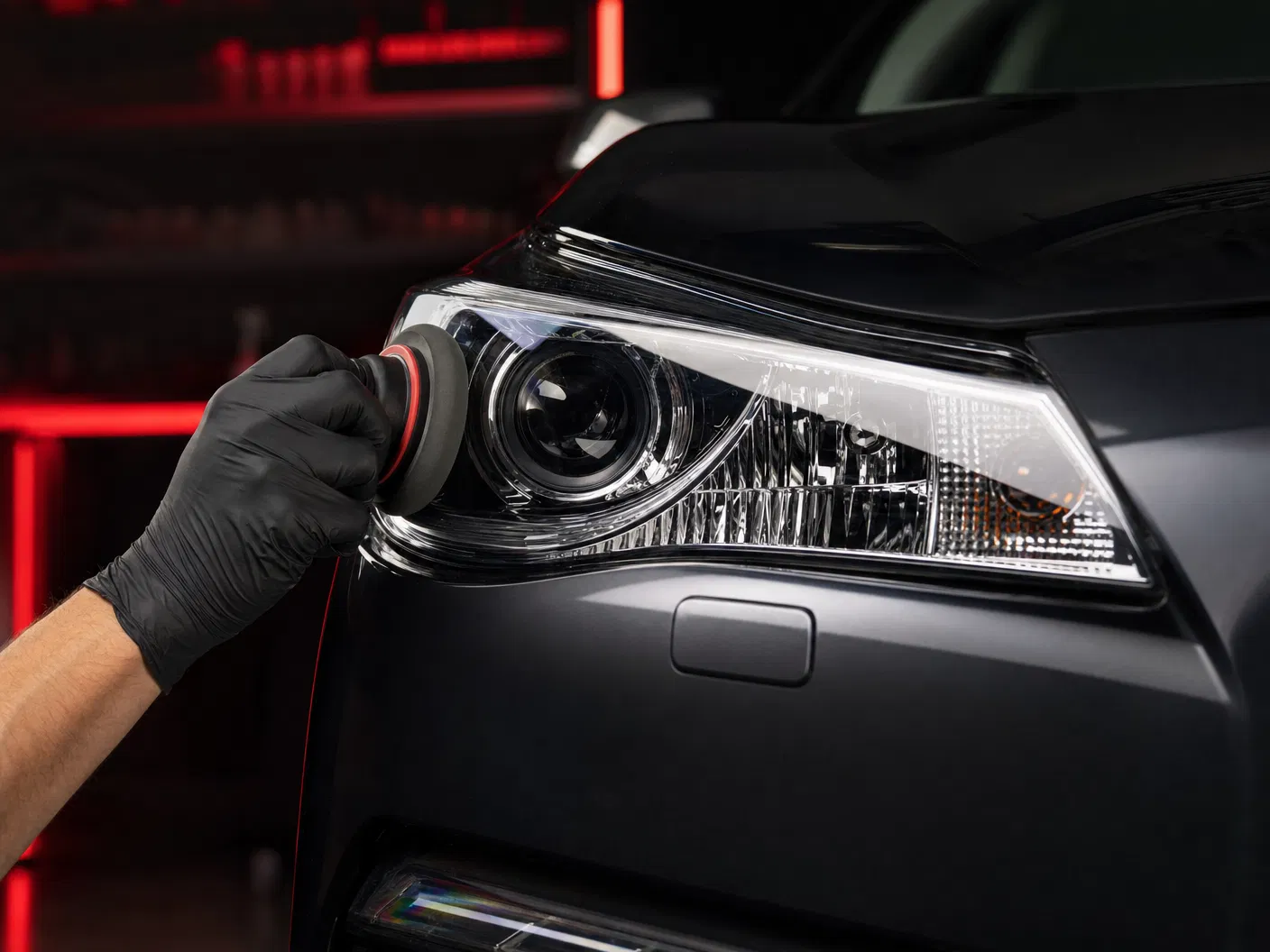
Headlight Restoration: Why Polishing Alone May Not Last
TAD Auto Detail•Headlight Care•5 min read
Quick Answer
Polishing can improve a cloudy headlight by removing a damaged surface layer, but it does not automatically recreate the original factory hardcoat. If the restored polycarbonate is left without suitable protection, haze or yellowing may return. How quickly that happens varies with the restoration method, product system, exposure, washing and storage.
Why Modern Headlights Deteriorate
Many modern outer headlamp lenses are made from polycarbonate because it is light, transparent and impact resistant. The exposed lens normally relies on a protective hardcoat to improve weathering and abrasion resistance. Over time, ultraviolet exposure, heat, road contamination, washing and surface abrasion can degrade that outer system.
The result may appear as yellowing, haze, roughness, peeling coating or fine surface cracking. These symptoms are not all identical, so the correct treatment starts with inspection rather than assuming every dull lens only needs compound.
What Polishing Actually Does
Machine polishing uses abrasives to level light surface defects. Where deterioration is deeper, controlled wet sanding may be needed before progressively refining the surface. This can restore clarity when the damage is confined to the outside of the lens.
However, abrasive correction removes material. It cannot repair a crack, internal condensation, a burnt reflector, failed electronics or damage on the inside of a sealed lamp. It also does not, by itself, replace the protection removed during correction.
What Makes a Restoration Complete
A sound restoration normally involves four decisions:
Diagnosis — confirm that the problem is external and restorable
Controlled correction — remove only as much damaged material as necessary
Optical refinement — finish the lens evenly so it is clear rather than merely shiny
Suitable protection — apply a compatible protective system and follow its curing and aftercare requirements
Protection may involve a purpose-designed coating, protection film or another documented headlamp refinishing system. These are not interchangeable. A coating can improve surface protection and ease of cleaning; paint protection film adds a sacrificial physical layer against light abrasion and minor stone impacts. Product suitability, optical effect and warranty depend on the specific system used.
Why Fixed Lifespan Claims Are Unreliable
Claims such as “polishing lasts six months” or “restoration lasts three years” are too broad. Longevity depends on the condition of the original lens, how aggressively it has been corrected before, the protection applied, exposure to daylight and heat, mileage, road conditions and maintenance.
When Restoration Is Not the Right Repair
Replacement or specialist lamp repair may be more appropriate when there is deep crazing, structural cracking, impact damage, failed mounts, internal water damage, reflector deterioration, electrical failure or severe damage beneath the outer surface. We'll always explain this before accepting a job that cosmetic treatment alone can't solve.
Frequently Asked Questions
Is compound alone enough for cloudy headlights?
It can improve mild surface haze, but more advanced deterioration may require sanding and a renewed protective system.
Does polishing remove the factory coating?
Correcting a deteriorated lens can remove remaining damaged coating and some polycarbonate. That is why the finishing and protection stages matter.
Can headlights be polished repeatedly?
They should not be treated as infinitely renewable. Every abrasive process removes material, so previous work and lens condition must be assessed.
Is ceramic coating the same as PPF?
No. A coating is a thin surface treatment; PPF is a physical film. Their protection, maintenance and warranty characteristics differ.
Will restoration fix condensation inside the lamp?
No. Internal moisture requires diagnosis of the lamp housing, vents or seals.
We use cookies to make this site work. With your consent we'd also like analytics cookies, to see how visitors use it. See our Cookie Policy for details.