Can Cloudy Headlights Fail an MOT? UK Rules Explained
TAD Auto Detail•MOT & Legal•5 min read
Quick Answer
A cloudy lens is not automatically listed as a failure simply because it looks unattractive. It can contribute to an MOT defect if the headlamp's condition results in unacceptable operation, colour, intensity or beam aim. The tester assesses the lamp against the current MOT inspection manual; only the test station can decide the outcome for the vehicle presented.
The DVSA manual for cars and passenger vehicles covers headlamp presence, condition, operation, compliance and aim. It instructs testers to assess required lamps and damaged or repaired lamps for relevant factors such as security, colour, light output and durability. Headlamp aim is checked against defined beam criteria.
The manual also addresses products fitted to a lens or light source that obviously reduce intensity or change the emitted colour. Depending on the defect and severity, the classification can differ. This is especially relevant to tinted products: “it passed before” is not a guarantee that a particular lamp and film combination is compliant or will pass again.
How Cloudiness Can Matter
External haze may reduce transmission or scatter the beam. If the tester cannot obtain an acceptable beam image, the intensity is not in accordance with requirements, or another listed defect is present, the vehicle may fail. But the correct statement is not “yellow headlights always fail.” Condition and performance determine the result.
What Restoration Can and Cannot Do
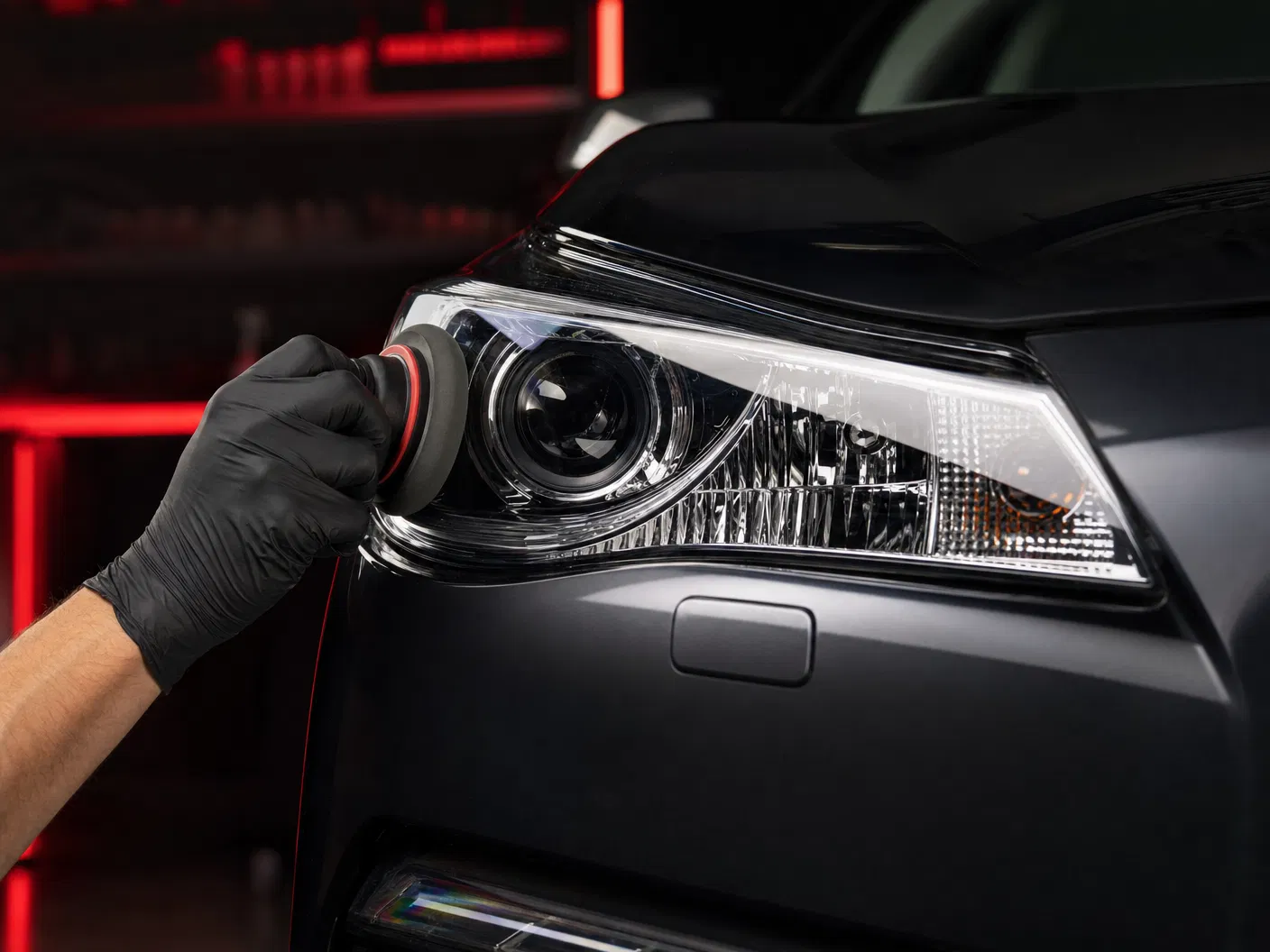
Professional restoration may improve a lens whose problem is confined to the outer surface. It cannot correct poor aim, an incompatible bulb, wiring faults, a failed levelling system, internal reflector damage or condensation caused by a housing fault. Those issues need appropriate mechanical or electrical diagnosis.
Before Your MOT
Check that both dipped and main beams operate, the lamp units are secure, emitted colours match the legal requirements, no unsuitable product obscures the lens, and there is no obvious damage or heavy condensation. If the lenses are visibly degraded, arrange assessment early enough to allow for restoration or replacement. We won't market restoration as a guaranteed MOT pass — no one honestly can.
Tinted Headlight Film Warning
We won't tell you a tint percentage is automatically “MOT legal.” The outcome depends on the complete installed lamp, its emitted colour and intensity, and the tester's assessment on the day. A product on the lens that obviously reduces intensity or changes colour can be recorded as a defect under the manual.
No. The relevant question is whether the lamp meets the applicable condition, operation, intensity, colour and aim requirements.
Can polishing guarantee a pass?
No. It may improve an external lens problem, but the test covers other lighting defects too.
Does an MOT tester measure a universal headlight brightness number?
The inspection manual sets procedures and defect criteria — there isn't a single simple brightness percentage tied to a pass or fail.
Can tinted PPF fail an MOT?
It can cause an issue if the installed product obviously reduces intensity or changes emitted colour outside the requirements. No installer should guarantee the result without testing the complete lamp.
Where should I check the current rules?
Use the current GOV.UK MOT inspection manual, since it can be updated — linked above.
We use cookies to make this site work. With your consent we'd also like analytics cookies, to see how visitors use it. See our Cookie Policy for details.