Quick Answer
Restoration is usually worth considering when deterioration is limited to the outer lens. Replacement or specialist repair is more appropriate for structural cracks, failed mounts, serious internal moisture damage, defective optics or electronics, or a lens too deeply damaged for safe correction. The cheapest option is not automatically the correct one.
When Restoration Makes Sense
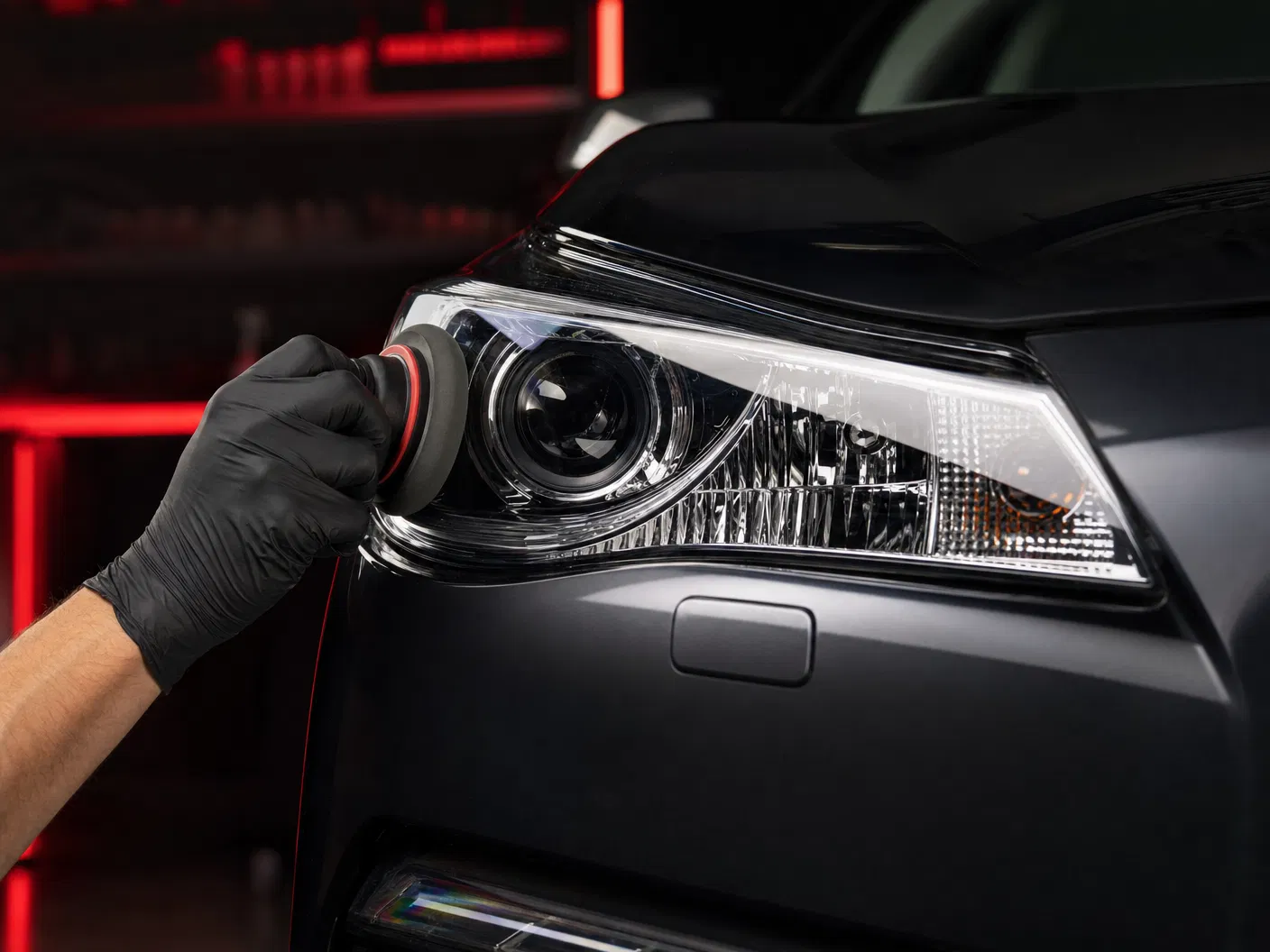
Restoration retains the existing lamp assembly and can be cost-effective where the housing, optics, seals and electronics remain sound. It is particularly suitable for surface yellowing, haze and light abrasion that can be corrected without excessive material removal.
When Replacement Makes Sense
Choose replacement or specialist repair when the unit has impact damage, broken fixings, persistent internal water entry, damaged reflectors, failed LEDs or control modules, or severe cracking and crazing. Surface polishing cannot repair those faults.
OEM, Aftermarket and Used Units
Replacement is not one simple product. A new original-equipment lamp, aftermarket pattern part and used assembly can differ in price, condition, compatibility, beam performance, control modules and warranty. Some modern units require coding or calibration. Premium LED or matrix units can cost substantially more than older halogen units — there's no single price that applies to every car.
What About Replacing Only the Lens?
Separate lens replacement is available for some lamps, but opening and resealing an assembly is specialist work. Suitability depends on parts availability, construction, bonding method and the condition of the internal components. It should not be treated as routine polishing.
Is restoration always cheaper?
Usually for a suitable surface defect, but diagnosis and the available replacement options determine the real comparison.
Can deep cracks be polished out?
No. Structural cracks require replacement or specialist repair.
Does restoration preserve the factory seal?
External restoration does not require opening the lamp, but it cannot guarantee that an existing seal is healthy.
Can a previously restored headlight be restored again?
Possibly, after assessing remaining material, previous coating and defect depth. Repetition should never be assumed safe indefinitely.
Do replacement headlights need alignment?
They may require aim adjustment, and some modern systems may require coding or calibration.
Not sure whether your headlights need restoring or replacing? Send us a photo for an honest assessment.
See Our Restoration Service