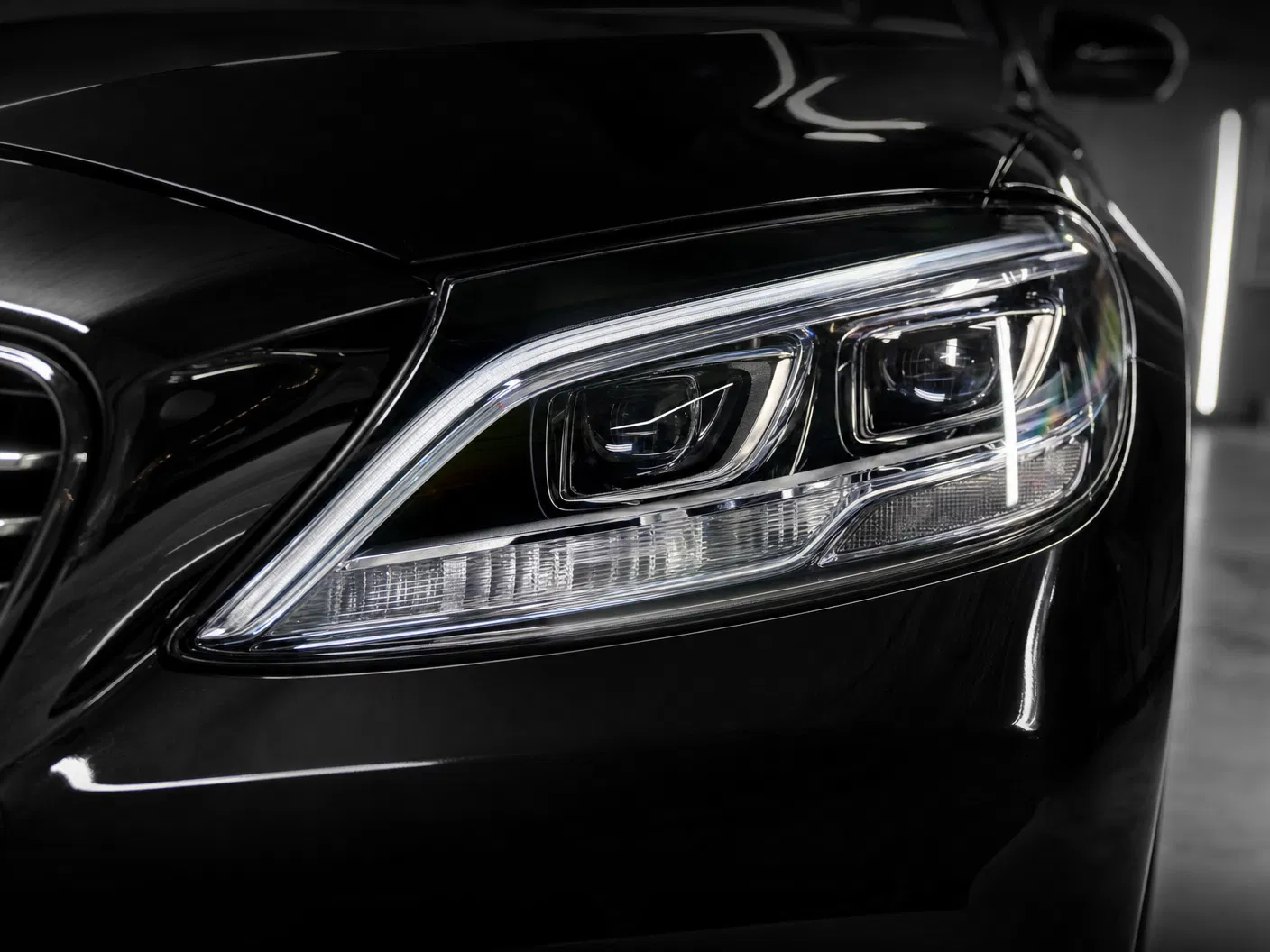
Clear vs Tinted Headlight PPF: Which Should You Choose?
TAD Auto Detail•Headlight Styling•5 min read
Quick Answer
Choose clear PPF when protection is the priority and you want the lowest avoidable risk of changing the lamp's emitted colour or intensity. Tinted PPF changes appearance by reducing or filtering light, which creates additional road-use and MOT risk. No installer should claim that “light smoke” is automatically legal simply because a supplier publishes a transmission figure.
Clear PPF
Clear film is intended to retain the original appearance while adding a sacrificial surface. The exact product still matters: clarity, texture, adhesive, compatibility, thickness, warranty and resistance to weathering all differ. “Clear” does not mean mathematically zero optical effect, so we work from product-specific information rather than a universal transmission percentage.
Tinted PPF
Tinted film intentionally changes the lens appearance and the light passing through it. The final effect depends on film colour and transmission, lens shape and condition, lamp technology, bulb or LED output, optical design and installation. Two cars with the same film can therefore produce different completed results.
What UK MOT Guidance Actually Says
The DVSA inspection manual includes defects for a product on a headlamp lens or light source that obviously reduces light intensity or changes emitted colour outside the requirements. Headlamp colour, intensity and aim also have their own criteria. The manual does not provide a simple consumer rule saying that every headlamp film above a particular VLT is legal.
Why a VLT Number Is Not Enough
Visible light transmission describes a material under defined test conditions. It does not, by itself, certify the completed headlamp, emitted colour, beam pattern or road legality. Unless the supplier provides relevant application-specific testing and the installed lamp remains compliant, “road legal by design” is marketing, not proof.
Our Position
We offer clear headlight PPF as the default protection option. Where tinted film is offered, we state the exact product, explain that it may affect light output and MOT assessment, avoid compliance guarantees, and get written acknowledgement from the customer. We'll decline an installation that would create an obviously unsuitable result.
We use cookies to make this site work. With your consent we'd also like analytics cookies, to see how visitors use it. See our Cookie Policy for details.